
Common Reasons Exterior Paint Fails Too Soon
Common Reasons Exterior Paint Fails Too Soon
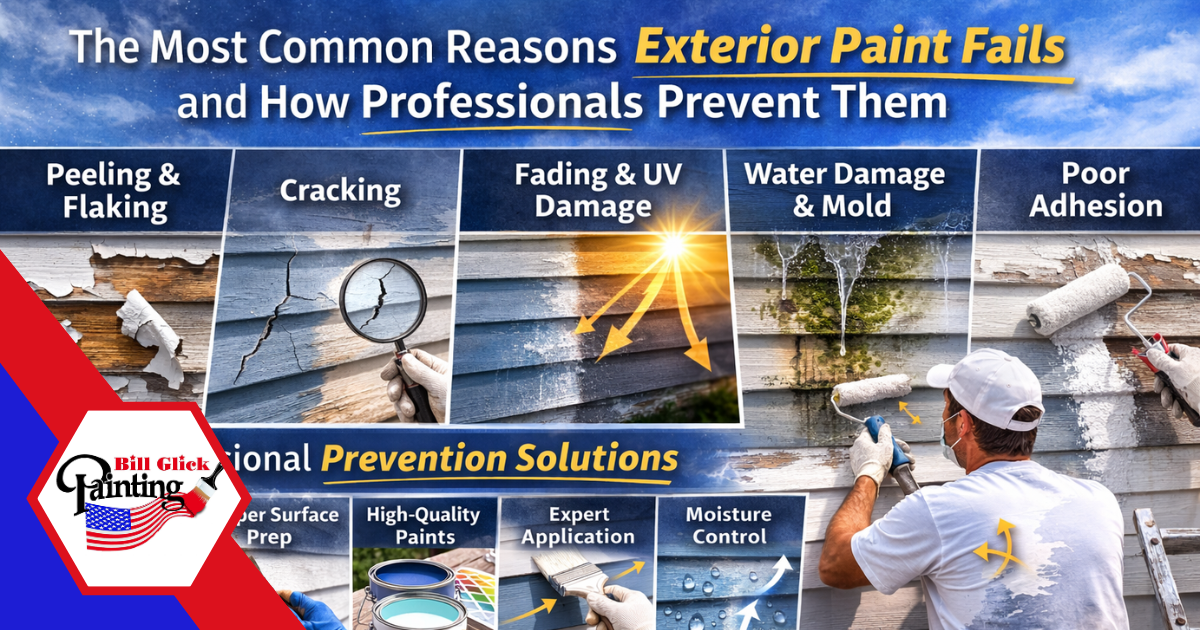
When exterior paint starts peeling, cracking, or fading sooner than expected, it’s more than just frustrating—it’s usually a sign that something in the painting process didn’t hold up the way it should. Homeowners often assume paint failure is caused by “bad paint,” but the truth is that premature paint problems are usually tied to preparation, moisture, product selection, or application conditions. Exterior paint is meant to protect your home for years, so when it fails too soon, it can lead to higher maintenance costs and even expose the home to weather-related damage underneath the surface.
One of the most common reasons exterior paint fails early is poor surface preparation. If a home isn’t properly cleaned, scraped, sanded, and repaired before painting, the new coating may stick to dirt, chalky residue, or loose paint instead of bonding directly to a stable surface. This weak adhesion causes peeling and flaking, often starting in areas that were already compromised. Paint doesn’t “fix” damaged surfaces—it only performs well when the surface underneath is sound, dry, and properly prepped for the new system.
Moisture is another major cause of early paint failure, especially in climates like Ohio where rain, snow, humidity, and temperature swings create constant stress on exterior surfaces. If moisture gets behind the paint through cracked caulk lines, exposed wood, or unsealed gaps, it can push outward and cause bubbling, blistering, and peeling. In many cases, the paint is failing not because the coating is weak, but because water is entering from behind and breaking the bond from the inside out. This is why sealing, repairs, and proper priming are critical for a durable paint job.
Exterior paint can also fail too soon when the wrong products are used or when paint is applied under poor weather conditions. Painting in temperatures that are too cold or too hot, applying coatings during high humidity, or rushing dry times between coats can prevent paint from curing correctly. When paint doesn’t cure properly, it becomes more vulnerable to cracking, fading, and uneven wear. Lower-quality paint products can also break down faster in direct sunlight or heavy weather exposure, leading to premature chalking and color loss. A professional approach includes selecting the right paint system for the surface and applying it in conditions that support long-term durability.
Ultimately, exterior paint fails too soon when the protective system is weakened at any point in the process. Prep work, moisture control, priming, product quality, and application technique all work together to create a finish that lasts. When any one of those steps is skipped or rushed, the paint may look fine at first—but it won’t hold up the way it should over time. A properly done exterior paint job isn’t just a color change—it’s long-term protection for your home.
Why Hiring a Professional Painter Saves Money Long-Term

When Is the Best Time to Paint or Stain Your Deck and Fence in Ohio
How Professional Application Extends the Life of Exterior Paint